
Carbon in. Hydrogen out.

A single subsurface ophiolite reactor combines chemical enhancement and physical displacement: each kilogram of hydrogen produced removes net CO₂ from the atmosphere.

CO₂ injected deep into the ophiolite dissolves olivine and turns into carbonate. The iron released from the olivine oxidises, and that reaction makes hydrogen. The CO₂, heavy and reactive, stays low and is mineralised. The hydrogen, light, rises and collects below a dense dunite seal, where a separate well produces it.

One reactor, two wells

Ophiolite as a reactor: CO₂ in, hydrogen outCO₂ is injected at the base of the ophiolite and mineralises on its way up; the reaction releases hydrogen, which rises, collects below a dense dunite seal and flows into a separate producer well. The CO₂ never reaches the producer. SurfaceShallow zone (biologically active, <80°C)Dense dunite sealDeep reactive zone (above pasteurisation threshold)CO₂ injectorH₂ producerCO₂ mineralises en route→ never reaches the H₂ producerH₂ accumulates at the seal→ flows into the producer wellCO₂ (mineralises)H₂ (rises to the producer)Carbonate precipitate

Conceptual model, not to scale. The CO₂ mineralises on its way through the rock and never reaches the hydrogen producer.

How the reactor works

CO₂ sourceCement / DAC / bioCO₂ injectionSupercritical, into the ophioliteH₂ productionClean hydrogen outSubsurface ophiolite reactorChemical zoneCO₂ + formation waterdissolves olivineFe²⁺ oxidation → H₂Mg²⁺/Ca²⁺ + CO₃²⁻→ carbonate minerals(CO₂ mineralises here)Displacement zoneDense CO₂ (700 kg/m³)sinks to the baseLight H₂ (7 kg/m³)rises to the producer wellCO₂ never reaches theproducer: it is mineralisedPermanent CO₂ storageMagnesite + calcite + residual trappingCarbon creditsVerified permanent removalNet result: carbon-negative hydrogenEach kg of H₂ produced removes net CO₂ from the atmosphere

Published science

The link between CO₂ mineralisation and hydrogen formation is set out in our peer-reviewed paper with the University of Edinburgh.
Environmental Science & Technology Letters
Iron Oxidation Links CO₂ Mineralization to Hydrogen Formation
Aliakbar Hassanpouryouzband, Laila Lotz, Sam Pickering, Faisal W. K. Khudhur, Oakley Turner and Arnaud Lager
doi.org/10.1021/acs.estlett.6c00308
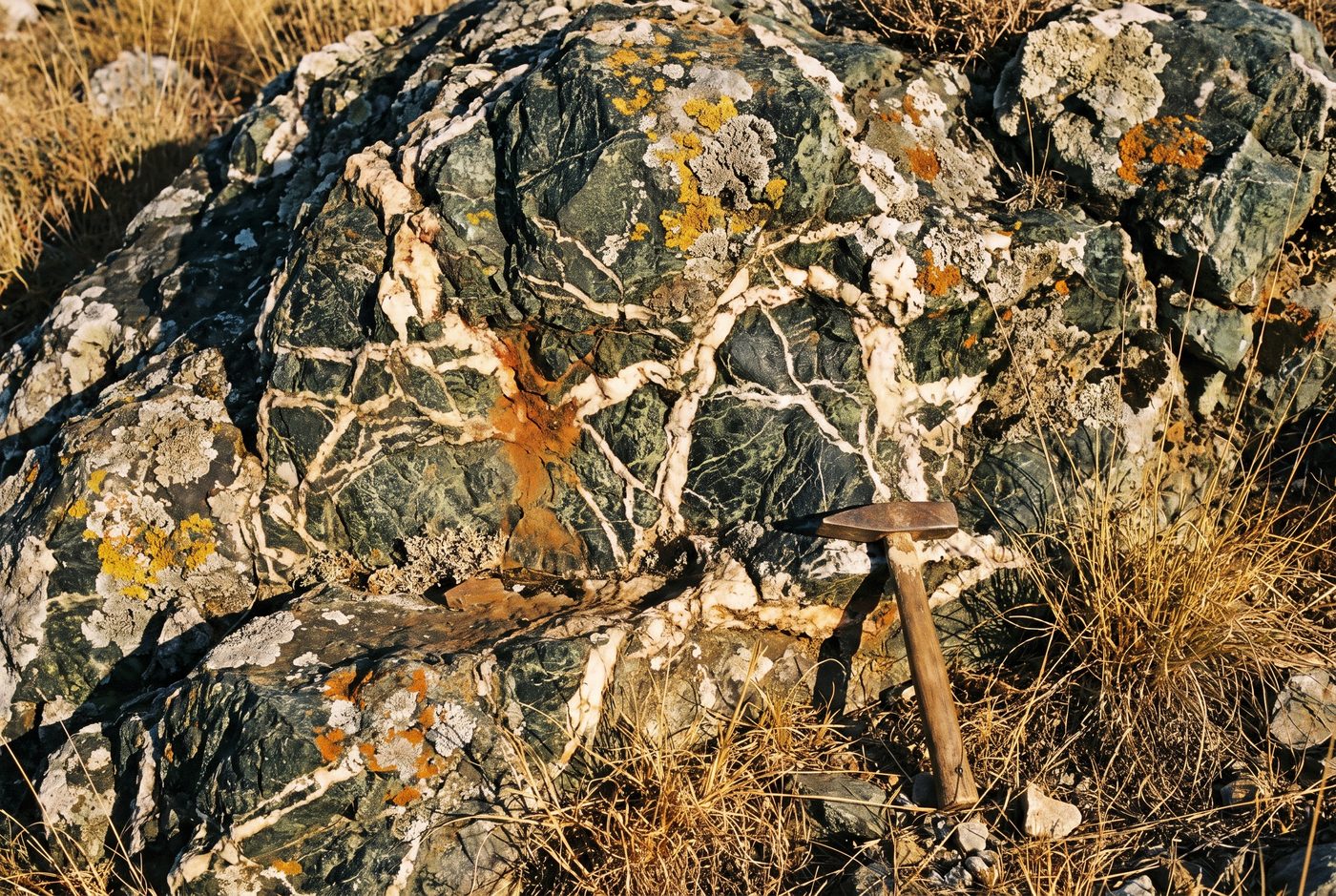
Serpentinite with white carbonate veins
IllustrationCarbonate veins in serpentinite: the reaction at work.

Where it is tested first

Our PITHOS project in the Othrys ophiolite of central Greece will inject 150,000 tonnes of CO₂, captured at Holcim’s HERACLES cement plant, with Weatherford. It is where carbon in and hydrogen out will be measured in the field.

See the PITHOS project

Serpentinite hills of Othrys, central Greece
IllustrationThe Othrys ultramafic belt.

Carbon-negative hydrogen

If you capture CO₂ or need clean hydrogen, one reactor can serve both. Get in touch.

Partner with us