
The Earth makes hydrogen, and in a few places it accumulates. That is established science. What is not established is how much can be produced, from which wells, at what rate, for how long.
Since 2023 the sector has attracted a wave of announcements: “discoveries”, resource estimates in millions of tonnes, share prices that jump on a soil survey. Some of it is good science reported early. Some of it is not. This page explains what each kind of evidence can and cannot prove, so that investors, partners and journalists can tell the difference.
Warning signs
Millions of tonnes “in place” estimated from surface or drilling shows alone. No well has yet shown it can deliver that gas.
High hydrogen readings in the top metre of soil, or aerial pictures of fairy circles, announced as if they were a reservoir.
Headlines and share-price moves that come before drilling, and a next step that is always another survey or another placement, never a test.
Soil-gas surveys and fairy circles
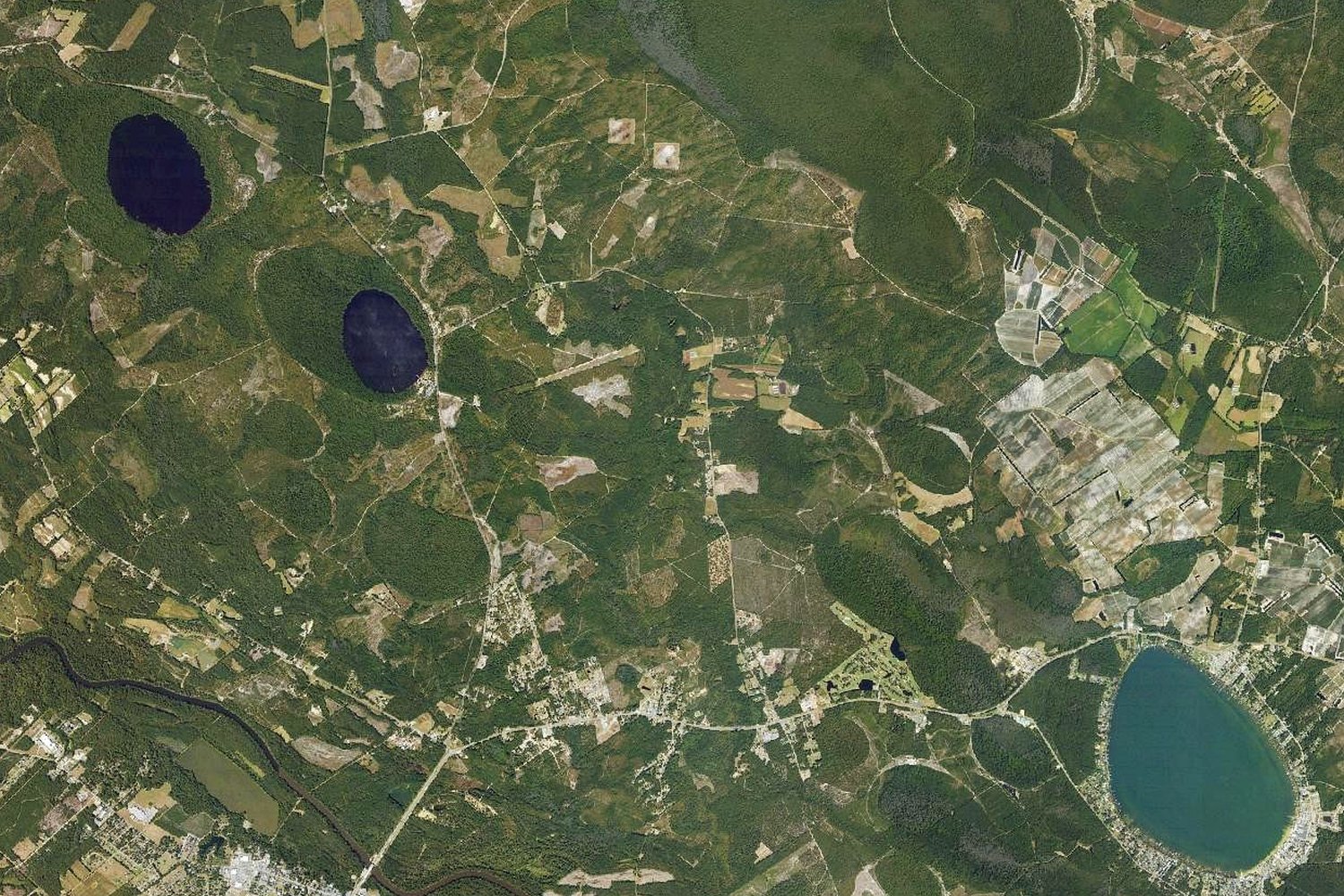
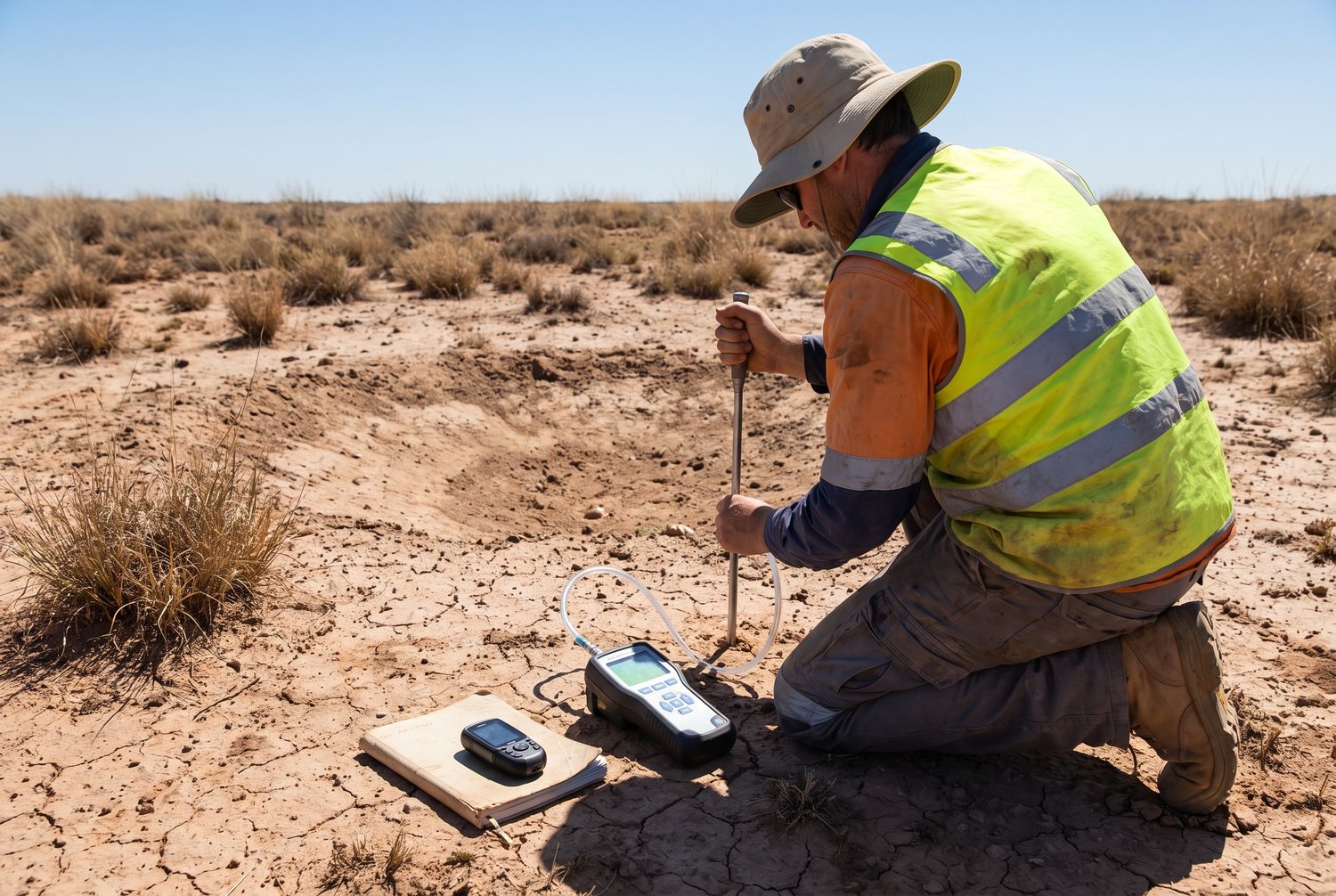
A soil-gas survey pushes a thin probe about a metre into the ground and measures the gas it draws out. In some regions hydrogen appears in shallow, roughly circular depressions a few hundred metres across, nicknamed fairy circles, where the vegetation thins out. Both are visible, cheap to map and easy to photograph from the air.
The problem is that hydrogen is a very active molecule near the surface. Soil bacteria make it and eat it; readings change from hour to hour with temperature, rain and pressure; and the drilling of the probe itself can release hydrogen from fresh rock and steel. A high reading tells you hydrogen is passing through the top metre of soil today. It does not tell you where it came from, whether it is trapped anywhere, or whether anything could be produced.
What it tells you
- Hydrogen is moving through the near surface.
- Where anomalies line up along a deep fault, the gas may be coming from depth: a genuine pathway, and a good place to look further.
What it cannot tell you
- Whether the hydrogen is biological, shallow or deep.
- Whether any is trapped: a flux is not a reservoir.
- How much there is, or whether it could be produced economically.
Verdict: a useful first filter for where to look, especially along deep faults. Never evidence of a resource on its own.
Mud gas and gas purity
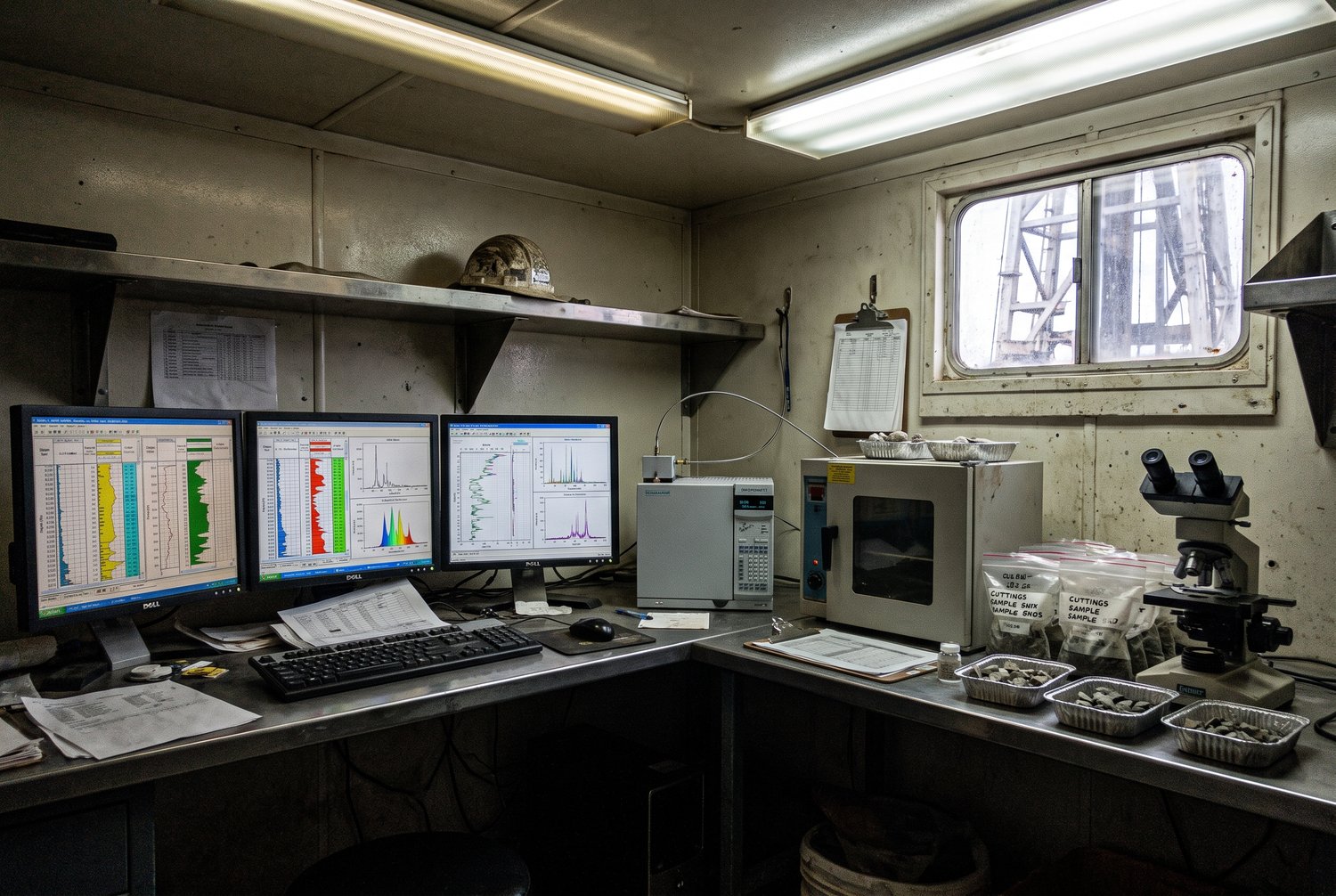
When a well is drilled, the drilling mud carries rock cuttings and any gas released from the rock back to the surface. There a gas trap extracts that gas and a chromatograph measures what it is made of, metre by metre down the hole: hydrogen, methane, nitrogen, helium. That composition gives the purity of the gas, which matters because every percent of something other than hydrogen has to be separated out and paid for.
Mud gas is one of the best exploration tools there is: it shows which layers carry hydrogen, and how pure it is, in real rock at real depth. But it is a reading of gas released while drilling, not of what the rock will give back. The drill bit and steel in the well can themselves generate some hydrogen, and the readings depend on how fast the well was drilled and how the mud was circulated.
What it tells you
- Which rock layers contain hydrogen, at what depth.
- The relative composition, and so the likely purity of the gas.
- Where to aim a test.
What it cannot tell you
- Whether the gas is free gas, which can flow to a well, or dissolved in water, which in practice is not economic to recover.
- How fast a well would produce, or for how long.
- A volume. Mud-gas percentages are not reserves.
Verdict: strong evidence that hydrogen is present at depth, and of its purity. Still not evidence that it can be produced.
Drill-stem tests and well testing
In a drill-stem test (DST), inflatable packers seal off one interval of the well, and the rock is allowed to flow into the pipe and up to the surface, while gauges record the pressure. A longer well test does the same over days or weeks. This is how the oil and gas industry has decided for a century whether a discovery is worth developing. Outside a single small field in Mali, which has powered a village since 2012, very few natural hydrogen wells have been flow-tested and published.
A flow test answers the three questions that decide whether hydrogen is a business:
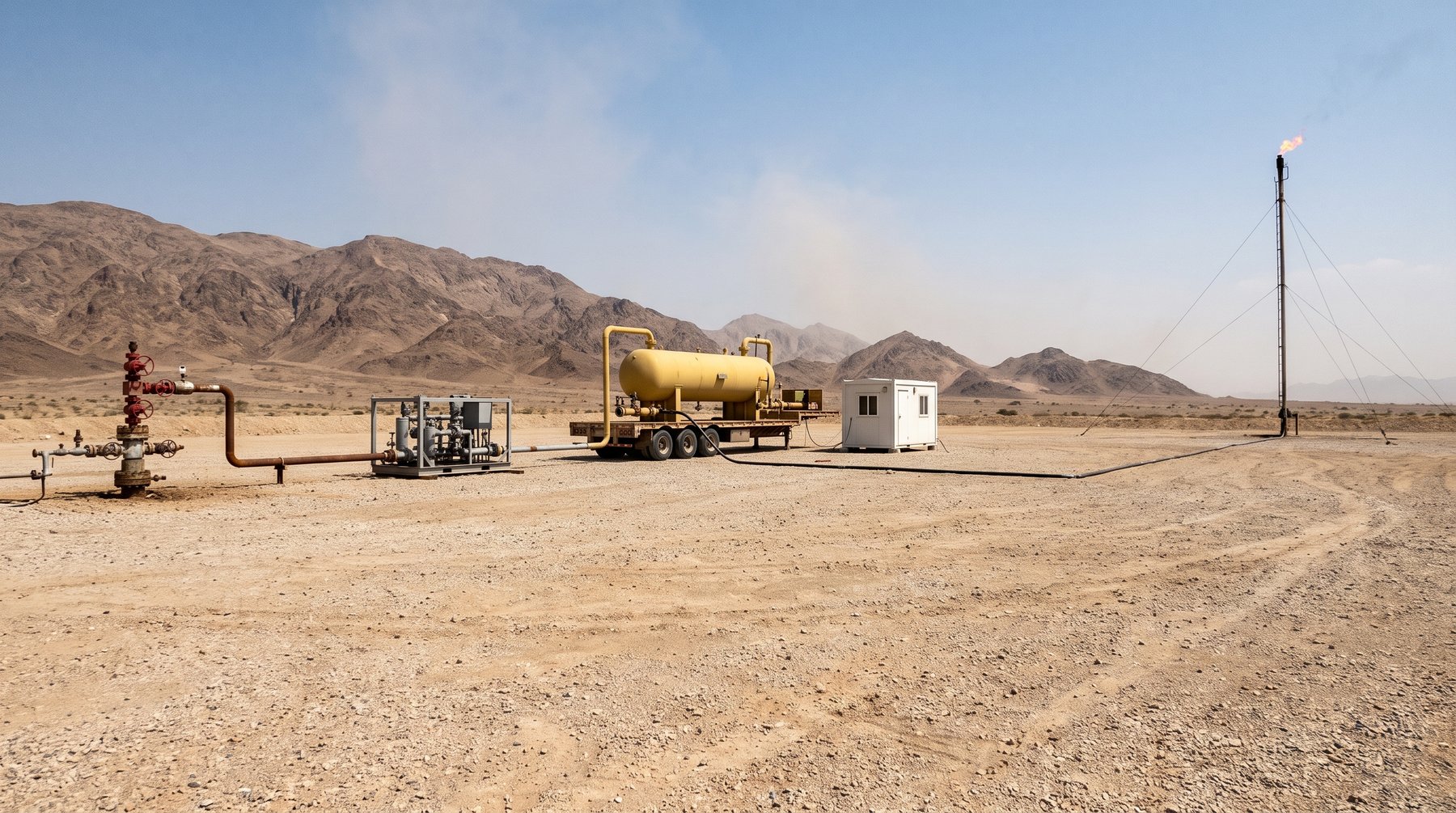
A clean sample taken at the surface or downhole under controlled conditions: the real composition and purity of what the well produces, not of what was released during drilling.
A measured production rate, in cubic metres or tonnes per day. This is the number that sets the cost of every kilogram.
How the rate and pressure fall as the well produces. The decline, and the pressure recovery when the well is shut in, show how big and how well connected the reservoir behind the well really is.
Verdict: the only evidence that turns hydrogen in the ground into a resource. Free gas flows; gas dissolved in water barely does. A test tells the two apart.
Three ways to look, three levels of proof
Five questions to ask before you believe a claim
- Has a well been drilled into the target? Surface surveys alone cannot establish a resource.
- Was the gas measured while drilling, and how pure was it? And was hydrogen generated by the drilling itself ruled out?
- Is it free gas or gas dissolved in water? Only free gas can be produced at a useful rate.
- Has the well been flow-tested? What rate, what composition, and how fast did the pressure fall?
- Who checked the numbers? An independent reservoir engineer’s report on a tested well is worth more than any press release.
We hold ourselves to the same standard. Our exploration well in Sharjah showed hydrogen in mud gas while drilling; we will not put a production number on it until we have re-entered and flow-tested it, planned for early 2027.
Evaluating a natural hydrogen project?
We are happy to talk through the evidence, ours or anyone else’s.
Talk to us